We are vigilant about DPRK activities.
This is a non-exhaustive list of reports from several sources.
We are always updating…
-
<Arms Control Wonk> 2025-6-10, A New Enrichment Plant At Yongbyon?
War in Ukraine
<Telegram> 2025-6-17, Kovalenko (KN-23)
<Telegram> 2025-4-24, Special Operation Forces (DPRK platoon in close combat)
<Telegram> 2025-4-16, Kovalenko (KN-23)
<Telegram> 2025-4-16, Kovalenko (Russia imports DPRK labors)
<Telegram> 2025-4-15, Kovalenko (Ammunition)
<Telegram> 2025-1-27, Special Operation Forces (Seized DPRK troops equipments)
<Telegram> 2025-1-25, Kovalenko (M-1978 Koksan)
<X> 2025-1-11, Volodymyr Zelenskyy (Two DPRK soldiers captured in the Kursk Region), https://x.com/ZelenskyyUa/status/1878046090018042169
<Telegram> 2025-1-8, Special Operation Forces (DPRK soldiers captured in the Kursk Region)
<Telegram> 2025-1-8, Special Operation Forces (DPRK soldier’s memo)
<Telegram> 2025-1-7, Special Operation Forces (DPRK 13 soldiers were killed)
<Telegram> 2025-1-3, Kovalenko (Soldiers’ notebook)
<HP, Ukraine Defense Intelligence> 2025-1-2 (Russians continued to involve units of the DPRK army in conducting hostilities in the Kursk region)
<Telegram> 2024-12-28, Special Operation Forces (Soldier’s memo)
<Telegram> 2024-12-26, Special Operation Forces (Soldier’s memo, How to eliminate a drone)
<Telegram> 2024-12-23, Kovalenko (Soldiers’s death)
<X> 2024-12-23, Volodymyr Zelenskyy (More than 3000 DPRK soldiers were killed and wounded), https://x.com/ZelenskyyUa/status/1871216838585016699
<Telegram> 2024-12-22, Armed Forces of Ukraine (Disguised ID of DPRK soldiers)
<Facebook> 2024-12-20, Air Force Command of UA Armed Forces (KN-23 attacks against Kyiv)
<Telegram> 2024-12-17, Kovalenko (Soldiers wounded)
<Telegram> 2024-12-17, Kovalenko (Reactions to drones)
<Facebook> 2024-12-17, Ukraine Defense Intelligence (DPRK deployed surveillance posts of drones)
<Telegram> 2024-12-16, Kovalenko (Drone footage)
<Telegram> 2024-12-15, Kovalenko (Drone footage)
<Telegram> 2024-12-14, Kovalenko (Dressed in Russian uniforms)
<Telegram> 2024-11-29, Kovalenko (KN-23, Artillery)
<Facebook> 2024-11-26, Ukraine Defense Intelligence (Foreign components from KN-23/KN-24)
Reference materials, War Sanctions webpage, https://war-sanctions.gur.gov.ua/en/components
<Telegram> 2024-11-24, Kovalenko (KN-23)
<Telegram> 2024-11-24, Kovalenko (Disguised as Russians)
<Telegram> 2024-11-23, Kovalenko (Oil transfer)
<Telegram> 2024-11-22, Kovalenko (Transfer of soldiers)
<Telegram> 2024-11-20, Kovalenko (13th GRAU stored KN-23)
<Telegram> 2024-11-19, Kovalenko (67th GRSU stored DPRK munitions)
<Telegram> 2024-11-16, Kovalenko (“DPRK don’t believe God”)
<Telegram> 2024-11-15, Kovalenko (UAV)
<Telegram> 2024-11-13, Kovalenko KN-23)
<Facebook> 2024-11-10, Ukraine Defense Intelligence (Intercepted DPRK troops radio)
<Telegram> 2024-11-8, Kovalenko (DPRK soldiers in Kursk)
<Telegram> 2024-11-7, Kovalenko (DPRK soldiers in Kursk)
<Telegram> 2024-11-5, Kovalenko (DPRK soldiers, Drone training)
<Telegram> 2024-11-4, Kovalenko (The first DPRK troops under fire )
<Facebook> 2024-11-2, Ukraine Defense Intelligence (More than 7000 DPRK soldiers moved from Primorsky Krai to areas near Ukraine)
<Telegram> 2024-10-31, Kovalenko (3000 DPRK soldiers in Kursk Region)
<Facebook> 2024-10-27, Ukraine Defense Intelligence (Transporting DPRK mercenaries to the front in trucks with civilian plates)
<Facebook> 2024-10-24, Ukraine Defense Intelligence (The first DPRK troops arrived in the combat zone)
<Telegram> 2024-10-23, Kovalenko (DPRK troops arrival in Primorsky Krai)
<Telegram> 2024-10-15, Kovalenko (Less 1% DPRK officers speak Russian)
<Telegram> 2024-10-15, Kovalenko (DPRK troops may be in Kursk Region)
<Telegram> 2024-10-14, Kovalenko (Fiction of 100,000 units preparation)
<Telegram> 2024-10-9, Kovalenko (DPRK ammo stored at 67 GRAU)
<Telegram> 2024-10-8, Kovalenko (DPRK engineers were deployed)
<Telegram> 2024-9-29, Kovalenko (Attempt to blow up railway)
<Telegram> 2024-9-3, Kovalenko (DPRK ballistic missile)
<Telegram> 2024-8-6, Kovalenko (DPRK ballistic missile)
<Telegram> 2024-8-2, Kovalenko (DPRK mortars delivery)
-
<Elliptic> 2026-1-6, North Korea's crypto hackers have stolen over $2 billion in 2025Analysis (2025)
<TRM>, 2025-12-18, North Korea and the Industrialization of Cryptocurrency Theft
<ISIS> 2025-12-19, Imagery Update of Activities at North Korea’s Yongbyon Site
<Chainalysis> 2025-10-1, DPRK IT Workers: Inside North Korea’s Crypto Laundering Network
<CAR> October 2025, Modified North Korean submunition used in FPV UAV in Ukraine
<38 North> 2025-8-7, Quick Take: Yongbyon’s 5 MWe Reactor Undergoes a Makeover.
<38 North> 2025-6-13, Yongbyon Nuclear Scientific Research Center: A Suspected New Enrichment Facility and Dismantlement of 50 MWe Reactor
<CSIS> 2025-6-12, Suspected Uranium Enrichment Building at Yongbyon
<ISIS> 2025-6-11, Is North Korea Building a New, Kangsong-Like Building at Yongbyon?
<Middlebury Institute of International Studies at Monterey> 2025-6-10, Suspect Enrichment Facility in the DPRK
<CSIS> 2025-5-8, Yongdok-tong Nuclear High Explosives Test Facility: Part 3
<CSIS> 2025-5-2, Yongdok-tong Nuclear High Explosive Test Facility: Part 2
<CSIS> 2025-4-22, Yongdok-tong Nuclear High Explosive Test Facility: Part 1
<Open Source Centre> 2025-4-15, Brothers in Arms: Estimating North Korean Munitions Deliveries to Russia
<Open Source Centre> 2025-2-18, Red Passage: Russian-DPRK Munition Carrier Seeks to Transit the Suez
<Open Source Centre> 2024-11-22, Refined Tastes: Russian Oil Deliveries to Pyongyang Breach the Million Barrel Mark
<Conflict Armament Research> 2024 September, North Korean missiles produced in 2024 used in Ukraine
<Conflict Armament Research> 2024 February, North Korean missile relies on recent electronic components
<Conflict Armament Research> 2024 January, Documenting a North Korean missile in Ukraine
-
<Radio Free Asia> 2023-9-20, 당국 외면 속 죽어가는 해외 북 노동자 (Overseas North Korean Workers Dying Amid Government Neglect).
<BBC> 2025-8-12, North Koreans tell BBC they are being sent to work 'like slaves' in Russia.
<Korea JoongAng Daily> 2025-7-18, UN's North Korean sanction-monitoring team shares evidence of Pyongyang-Moscow military cooperation.
<CNN> 2025-7-2, North Korea to send as many as 30,000 troops to bolster Russia’s forces, Ukrainian officials say.
<CBS> 2025-5-2, How a routine hire at a Houston tech firm uncovered an alleged North Korea scheme
<Jiji> 2025-4-7, 2 Japanese Men Suspected of Helping N. Korean IT Worker
War in Ukraine
<MBC> 2025-06-26, 국회 정보위원회 백브리핑 (Background briefing by the National Assembly Intelligence Committee of the ROK).
<Комсомольская Правда>2025-06-17,Шойгу сообщил, что КНДР направит 5000 строителей на восстановление Курской области (Shoigu stated that the DPRK will send 5,000 construction workers to help with the reconstruction of the Kursk region.)
<ТАСС> 2025-6-17, КНДР направит 5 тыс. строителей на восстановление Курской области (The DPRK will send 5,000 construction workers to help with the reconstruction of the Kursk region.)
<Yonhap News Agency> 2024-10-29, [속보] 국정원 北폭풍군단 파병으로 알려져…입대연령 낮아 (National Intelligence Service Known to Deploy North Korean Storm Corps)
-
<US Department of Treasury> 2025-7-24, Treasury Sanctions Clandestine IT Worker Network Funding the DPRK’s Weapons Programs.
<Multilateral Sanctions Monitoring Team> 2025-7-18, MSMT Briefs UN Member States on its First Report (July 17, New York).
<US Department of State> 2025-7-17, MSMT Report on Unlawful North Korea-Russia Military Cooperation.
<Multilateral Sanctions Monitoring Team> 2025-5-29, Unlawful Military Cooperation including Arms Transfers between North Korea and Russia
<United States Mission to the United Nations> 2025-5-20, Remarks at the General Assembly High-Level Meeting on Human Rights in the DPRK
<US Justice Department> 2025-1-23, Two North Korean Nationals and Three Facilitators Indicted for Multi-Year Fraudulent Remote Information Technology Worker Scheme that Generated Revenue for the Democratic People’s Republic of Korea (IT Worker)
<US Justice Department> 2024-12-12, Fourteen North Korean Nationals Indicted for Carrying Out Multi-Year Fraudulent Information Technology Worker Scheme and Related Extortions (IT Worker)
<Republic of Korea, National Intelligence Service> 2024-10-18, 국정원, 북한 특수부대 러-우크라 전쟁 참전 확인 (NIS confirms participation of North Korean special forces in Russia-Ukraine war)
<US Justice Department> 2024-8-8, Justice Department Disrupts North Korean Remote IT Worker Fraud Schemes Through Charges and Arrest of Nashville Facilitator (IT Worker)
<UK, Office of Financial Sanctions Implementation> 2024-9-12, Advisory on North Korean IT Workers.
<US, Defense Intelligence Agency> 2024-5-29, North Korea Enabling Russian Missile Strikes Against Ukraine
-
Non-proliferation
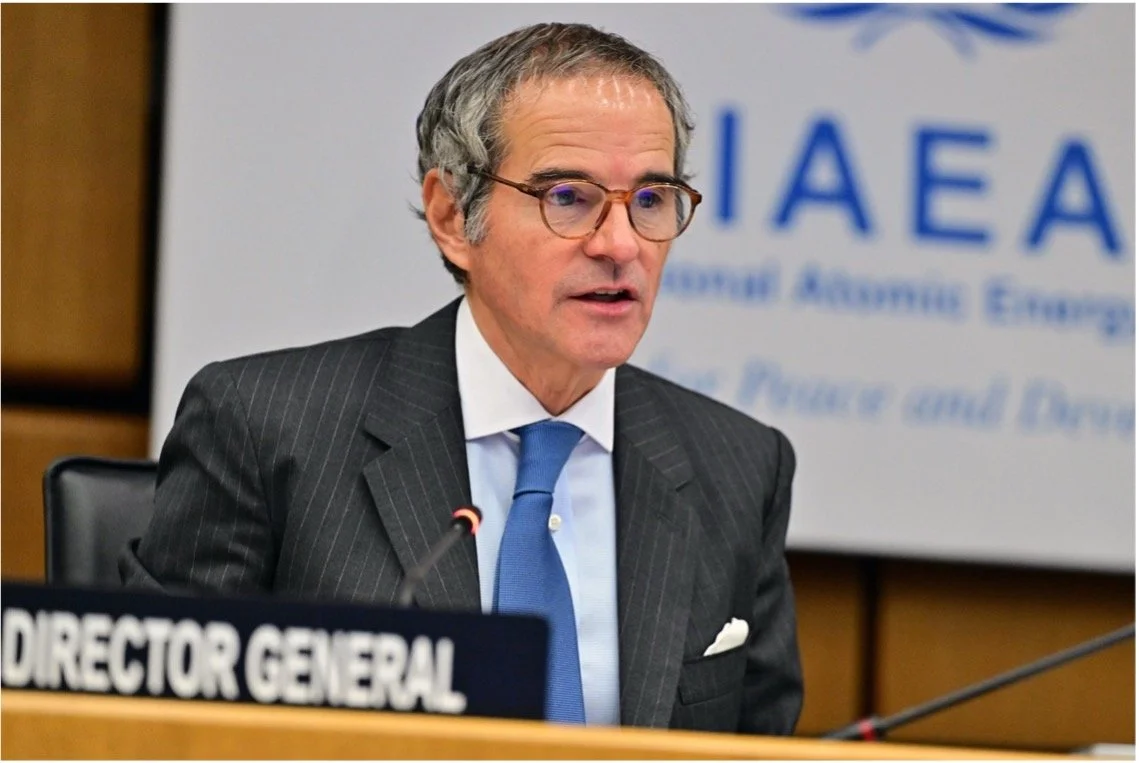
<IAEA> 2025-11-19, Introductory Statement to the Board of Governors
<United Nations Security Council> 2025-5-7, Non-proliferation/Democratic People's Republic of Korea (James Byrne, Chief Executive Officer and Founder of Open Source Centre, presented DPRK’s illegal coal and iron ore exports.) UN Web TV
<United Nations Security Council> 2024-12-18, Non-proliferation/Democratic People's Republic of Korea (Jonah Leff, Director of Operations for Conflict Armament Research (CAR), presented CAR’s additional findings after examining the remnants of a missile recovered in Ukraine.) UN Web TV
<United Nations Security Council> 2024-6-28, Non-proliferation/Democratic People's Republic of Korea (Jonah Leff, Director of Operations for Conflict Armament Research (CAR), presented CAR’s findings after examining the remnants of a missile recovered in Ukraine.) UN Web TV
<IAEA> 2025-8-18, Application of Safeguards in the Democratic People's Republic of Korea Report by the Director General.
<IAEA> 2025-3-3, IAEA Director General's Introductory Statement to the Board of Governors
<IAEA> 2024-11-20, IAEA Director General's Introductory Statement to the Board of Governors
<IAEA> 2024-9-9, IAEA Director General's Introductory Statement to the Board of Governors
<IAEA> 2024-8-26, Application of Safeguards in the Democratic People's Republic of Korea
<IAEA> 2024-6-3, IAEA Director General's Introductory Statement to the Board of Governors
<IAEA> 2024-3-4, IAEA Director General's Introductory Statement to the Board of Governors
Human rights abuse
<United Nations> 2025-5-20, Human Rights Abuses and Violations in the Democratic People's Republic of Korea - High-level plenary, General Assembly, 79th session
Topics
Catch Up on the Latest Highlights
March 14, DPRK missile launches
Mar 2, Yongbyon Expansion: IAEA Identifies New Enrichment Infrastructure and Resumed Reactor Activity
Feb 21, Analytical Brief: Profile of Sim Hyon-sop, Based on Former DPRK Diplomatic Testimony
Feb 7, Part 4: The Kyunghyang Shinmun’s Special Series on the One-Year Anniversary of DPRK Deployment to Russia
Feb 3 Part 3: The Kyunghyang Shinmun’s Special Series on the One-Year Anniversary of DPRK Deployment to Russia
Feb 2, Part 2: The Kyunghyang Shinmun’s Special Series on the One-Year Anniversary of DPRK Deployment to Russia
Jan 30, Part 1: The Kyunghyang Shinmun’s Special Series on the One-Year Anniversary of DPRK Deployment to Russia
Jan 27, DPRK missile launches
Jan 25, Why Radio Free Asia’s Return Matters: Must-Read by a Fulbright Scholar & DPRK defector from The Diplomat.
Jan 24, Uploaded several compelling insights from the chapter on North Korean diplomats in the book The Kim Jong Un I Saw
Jan 12, 3PM-, Rollout Event of MSMT (Multilateral Sanctions Monitoring Team) at UNHQ
UN Web TV link here!https://webtv.un.org/en/asset/k1t/k1tjrc6a8a
Jan 4, DPRK missile launches
DPRK Cyber Apparatus Update! Key State-Linked Entities and Overseas IT Operations. See
Blockchain analytics firms conclude that the DPRK has industrialized crypto theft in 2025—setting record losses through fewer but larger attacks, anchored by the $1.46B Bybit hack and increasingly sophisticated laundering pipelines. Read reports
February 21, 2026
Analytical Brief: Profile of Sim Hyon-sop Based on Diplomatic Testimony
This report highlights the information provided by Ryu Hyun-woo (류현우), a former DPRK Ambassador to Kuwait, regarding the high-profile North Korean financial operative Sim Hyon-sop.
The report outlines the physical characteristics, professional history, and current whereabouts of Sim Hyon-sop, a key figure linked to DPRK sanctions evasion. The testimony provides a rare personal look into Sim’s operational methods in the UAE, his character traits as a trusted financial "fixer" for the regime, and his reported relocation to the Sino-Korean border.
Source:DOS
January 30, 2026
DPRK Monitor intends to introduce a special report series by the South Korean newspaper The Kyunghyang Shinmun (경향신문), marking the one-year anniversary of the North Korean troop deployment to Russia. This series will be presented in several parts.
Part 1 examines the high level of proficiency among North Korean soldiers and their rapid adaptation to drone warfare—a combat environment previously unfamiliar to them.
"They Were Like 'Terminators': Crawling 1.8km for a 50m Surprise Attack" (Jaunuary 20, 2026)
This report details the tactical integration and combat effectiveness of the 13,000 North Korean troops deployed to Russia’s Kursk region. Initially vulnerable to modern electronic and aerial warfare, the DPRK forces have shown a remarkably steep learning curve, evolving into a highly disciplined and specialized force within months. The analysis suggests that the DPRK's involvement has transitioned from mere troop provision to a deep "blood alliance" with Russia, fundamentally altering the security dynamics of both Eastern Europe and the Korean Peninsula.
Summary
• Deployment Timeline: Following a military treaty in June 2024, approximately 13,000 DPRK soldiers arrived in Vladivostok in October and were positioned on the Kursk front by December 2024.
• Rapid Tactical Evolution: While initially struggling against drone-heavy environments, DPRK units adapted within 2–3 months, successfully implementing flank attacks and their own drone operations.
• Elite Combat Proficiency: Members of Ukraine’s 225th Independent Assault Battalion report that DPRK soldiers have demonstrated extreme stealth and discipline, such as crawling 1.8km to launch a surprise raid from only 50 meters away.
• "Terminator" Psychology: Russian prisoners of war (POWs) describe the North Koreans as exceptionally strong. Notably, DPRK soldiers frequently choose self-detonation/suicide over capture, a fanaticism that has shocked Ukrainian personnel.
• Internal Tensions: Drone footage has confirmed instances of armed friction and firefights between Russian and North Korean soldiers, indicating underlying command and control friction.
• Strategic Impact: The deployment is characterized as a "God’s Move" for Russia, providing critical engineering, mine clearance, and frontline infantry support that has resulted in a "painful loss" for Ukrainian momentum.
• Geopolitical Shift: The relationship between Moscow and Pyongyang has solidified into a "blood alliance," raising concerns that this combat experience will significantly enhance the DPRK’s military capabilities back on the Korean Peninsula.
(Summarized by DPRK Monitor)
January 25, 2026
RFA Resumes Broadcasts to North Korea (Reuters)
Significant Resumption
The resumption of broadcasts to North Korea is of great importance, following their suspension in 2025 due to a decision by the Trump administration.Strategic Importance
Regarding the critical role RFA plays in broadcasting to North Korea, DPRK Monitor highlights an article from The Diplomat titled, "Why Strengthening RFA Is a Strategic Imperative for US Policy on North Korea."A Powerful Perspective:
This article was authored by Eunsook Jang, a Fulbright Scholar and North Korean defector. It delivers a deeply persuasive and powerful message regarding the profound impact that the influx of foreign information has on the citizens of North Korea. An overview of the article is provided below.
Summary of Eunsook Jang, The Diplomat, "Why Strengthening RFA Is a Strategic Imperative for US Policy on North Korea"
The recent suspension of Radio Free Asia (RFA) news operations is a significant strategic error for U.S. foreign policy regarding North Korea.
Following a March 2025 executive order that restricted the organization, RFA was forced to halt operations in November 2025 for the first time in nearly three decades.
The author, a North Korean defector, emphasizes that independent information serves as a powerful, non-coercive tool that dismantles state indoctrination, empowers the "Jangmadang Generation," and challenges the Kim regime’s ideological monopoly.
Strengthening RFA is framed as an essential move for U.S. security interests and long-term regional stability.
Eunsook Jang’s Personal Transformation
Shattering 14 Years of Indoctrination: After growing up for 14 years consuming nothing but state propaganda, Jang’s entire worldview was dismantled by watching a single Indian movie.
Discovery of an "Unimaginable" Reality: In the film, she witnessed a lawyer fighting to defend a citizen against the state; this was a concept she found completely "unimaginable" because, in North Korea, legal defenders exist only to legitimize the regime's decisions.
The Catalyst for Defection: These brief, accumulated insights into human dignity and justice eventually gave her the clarity and resolve to escape the country at the age of 14.
Book Review (Part 1) The Kim Jong Un I Saw 私が見た金正恩
January 24, 2026
North Korean Diplomat (from Chapter 4)
At my father’s strong encouragement, I entered the Ministry of Foreign Affairs in 1999. After undergoing approximately one month of background checks, on August 27 the Ministry’s Senior Officials Bureau (Personnel Division) assigned me as a trainee to the Computer Materials Office of Section 2 of the External Communications Management Bureau.
The External Communications Management Bureau was the department specializing in wireless and other communications between the North Korean Ministry of Foreign Affairs and its embassies stationed overseas. At the time I joined the Ministry, it was developing new radio equipment in order to prevent interception by Western intelligence agencies such as those of the United States.
Because this required enormous funding and advanced technical expertise, a new Section 2 was established, composed of a radio equipment design and production team that included seven top-tier graduates of Kim Chaek University of Technology, university professors, and other specialists. Section 2 was organized into a Technical Unit and a Computer Materials Office.
The Technical Unit consisted of the operational personnel responsible for manufacturing radio equipment. Externally known as “DAKO” (an abbreviation of Data Korea), the Computer Materials Office functioned as a foreign-currency-earning team. DAKO’s task was to digitize all paper documents held by international organizations in Switzerland into electronic files and receive payment for that work.
This operation was initiated by Ri Su-yong [also known as Ri Chol], who was then serving as North Korea’s ambassador to Geneva. The External Communications Management Bureau used the funds earned in this way to purchase materials and components required for radio equipment production from China and other countries.
One day, after spending more than two years as a trainee within the Communications Management Bureau, an opportunity came my way. I was formally appointed as a Grade-2 staff member in the Radio Section of the Ministry of Foreign Affairs’ Situation Materials and Translation Bureau. My duties involved listening to broadcasts from Voice of America (VOA), Japan’s NHK, Radio Russia, China Radio International, and others, summarizing their content, and distributing written reports to the Minister of Foreign Affairs, the First Vice Minister, the Vice Ministers, and other senior officials.
The documents distributed by the Radio Section were titled Radio Report and Special Bulletin. Radio Report mainly covered reactions from the international community—such as the United States and Japan—related to the North Korean nuclear issue. Special Bulletin handled, under strict secrecy, articles concerning Kim Jong-il and his family. It was at that time that I first heard the names of Kim Jong-il’s eldest son, Kim Jong-nam, and Kim Jong-un’s mother, Ko Yong-hui.
Among the many radio channels available, Kim Jong-il and other senior North Korean officials trusted NHK the most. This was because NHK’s reporting was perceived as faster than others and objective. Kim Jong-il made several non-public visits to China, and on each occasion NHK reported from the very moment the special train crossed the Yalu River bridge into China. That was truly mysterious.
(Translated by DPRK Monitor)
<Book Review>From Havana to Seoul: The Secret Records of a Defector
January 19, 2026
The Kim Jong Un I Saw
私が見た金正恩
Overview
DPRK Monitor presents insights from the memoir The Kim Jong Un I Saw (Sankei Shimbun Publications), written by Ri (Lee) Il-gyu (리일규 李日奎), a former North Korean diplomat who defected from the embassy in Cuba in 2023. We will share interesting excerpts from this book, organized by section.
Table of Contents
Chapter 1: Defection Called Forth by Anger
Chapter 2: My Father's Downfall
Chapter 3: Escape from Hardship
Chapter 4: North Korean Diplomat
Chapter 5: Life in the Cuban Public Mission (Embassy)
Chapter 6: The "Chong Chon Gang" Incident
Chapter 7: The Kim Jong Un I Saw
Chapter 8: Secret Records of North Korea
Key Background
Reason for Publication: In the afterword, the author notes that he chose to publish in Japan due to political reasons and other factors.
Current Status: Ri Il-gyu (Lee Il-gyu) currently serves as a Senior Research Fellow at the Korea Institute for National Security Strategy (INSS).
Media Presence: He has appeared in numerous media interviews and YouTube features, including AP, BBC, and Arirang News.
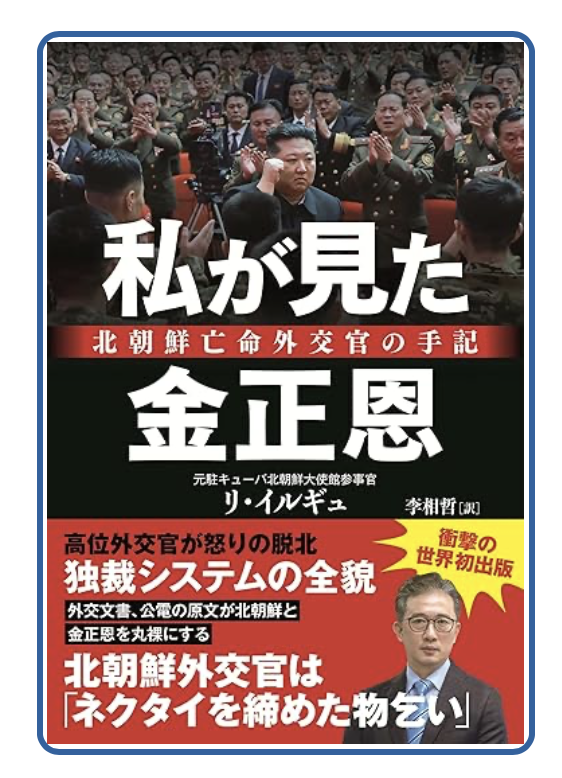
Source: Amazon.
January 12, 2026
<MSMT> Multilateral Sanctions Monitoring Team (MSMT) 2nd Report Rollout Event
Following statements by MSMT member States, private sector entities (Google Threat Intelligence Group, Palo Alto Networks, Sekoia.io, and Upwork) briefed on the DPRK’s cyber activities and overseas IT worker schemes that violate UN Security Council resolutions.
They outlined key operational methods used by the DPRK, including cyber-enabled revenue generation, illicit employment arrangements, and identity obfuscation techniques.
In response to questions from the floor, the speakers further addressed the role of public–private partnerships, hiring and recruitment mechanisms, and the use of artificial intelligence in detecting and disrupting DPRK deception tactics, including the identification of fraudulent identities and covert IT worker networks.
<Summaries>
Google Threat Intelligence Group: “North Korea’s Crypto Heist Machine: From Social Engineering to Laundering”
North Korean threat actors have stolen at least $2 billion in cryptocurrency since January 2025, accounting for at least 60% of all cryptocurrency thefts worldwide last year.
Operations rely on a combination of social engineering, including email phishing, social media engagement, and IT workers applying for fraudulent employment under false pretenses.
Recent tactics involve compromising software providers and services used by cryptocurrency entities, such as wallet providers and IT services.
In the 1.5-billion-dollar Bybit heist, hackers compromised reserve account management software while tricking employees into approving transactions.
The regime uses blockchain-based laundering tactics, including swapping between different types of cryptocurrencies and using mixers to hide the origin of stolen funds.
Laundered cryptocurrency is converted into cash through a network of regime operatives and facilitators to support any of the regime's objectives.
Palo Alto Networks: “Getting a Job Is the Job: North Korea’s Industrialized Fake Hiring and Revenue Pipeline”
For the North Korean regime, getting a job is their job, with thousands of citizens specifically trained for various parts of job-hunting campaigns.
The system is a mechanized system honed over years of training to exploit how companies hire.
The regime utilizes "identity mules" in country who willingly sell out their own identity to facilitate these hires across all six inhabited continents.
Money that would have been fed back into local economies or paid as payroll taxes is instead remitted over to Pyongyang.
This system will not go away until there is better international cooperation and cooperation with private industry to make the system harder to take advantage of.
Sekoia.io: “Hunter–Killer Teams Inside the Enterprise: North Korea’s Insider-Enabled Cyber Model”
IT workers and attack units function as "Hunter Killer teams" (Hunter Killer teams), where IT workers act as an insider threat and perform reconnaissance for attack units.
Recommended the implementation of corporate intelligence systems similar to anti-money laundering mechanisms.
Companies must know their employees, identify disgruntled individuals, and rely upon unit cohesion.
Employers should use their imagination to move people away from remote only situations and look at them face to face.
Constant adaptation is necessary because these actors are adapting their TTPs relentlessly.
Upwork: “From Wigs to Weaponized Identity: North Korea’s Professionalized IT Worker Threat”
North Korean IT workers have evolved from a rudimentary group using masks and wigs to a highly sophisticated, well-funded, and well-organized nation-state.
The fundamental issue is "identity" and whether it can be moved physically or virtually.
Facilitators are now able to bypass rigorous background checks and controls established by government advisories.
In some cases, individuals hired for office-based roles have allowed North Korean IT workers remote access to the network to perform their work overnight.
Job applicants are no longer competing against people with similar skills, but against professional facilitators whose sole role is to gain the job.
2 Response to Questions (by Speaker)
1. Public-Private Partnerships
Google Threat Intelligence Collaboration with the public sector is a mechanism for raising awareness and combating malicious activities. Operating unique digital infrastructure provides insights that allow for the design of specific protections when certain types of companies are targeted. Sharing information between sectors changes the game in combating North Korean cyber operations.
Sekoia.io Private sector collaboration functions like iron sharpening iron, where identifying bad actors and mapping out command and control infrastructure benefits all peers. Success is defined by interrupting an attack before it is detonated by sharing live, fresh artifacts.
Palo Alto Networks Developing the muscle for investigating incidents and making HR systems resilient is a result of concentrated work on this threat. Support is available to help the private sector become resilient free of charge. Establishing trust with governments is essential so that information sharing does not jeopardize victims but imposes costs on attackers. This open-ended, high-trust sharing should be replicated internationally between countries.
Upwork Relationships with government partners serve as a great barometer of how everyone is upping their game. Regular information sharing helps level-set whether internal processes and controls are on par with industry standards. From a policy level, a safe harbor for industry sharing is critical to allow information to flow without fear of adverse impacts from sanctions.
2. Hiring Mechanisms
Palo Alto Networks Making systematic changes from a government perspective is difficult because it may disrupt business. Working with technically versed experts to lower the threshold for threats entering systems is a better approach. Referral-based hiring and establishing actual relationships with candidates will likely make a comeback. ID verification is the number one piece of protection; validating that the person interviewed is the same person starting work with a legitimate government ID goes a long way.
Upwork Establishing a safe harbor for industry information sharing at the policy level is critical. Since the hiring process often spans multiple companies and platforms, having the ability to share data across the industry is a necessary move forward.
Sekoia.io Embrace inconvenience by mixing up hiring practices. This strategy ensures the organization remains a difficult target to fix for threat actors.
3. Use of AI
Palo Alto Networks Deep fake technology is incredibly accessible, but it remains detectable through machine learning based algorithms that look at pixels and formulation. This detection technology is comparatively low-cost and can be implemented directly into the hiring process to flag suspicious signals. It is also logical to deploy this software for any employee authorized to transfer money to prevent financial crime involving impersonation.
Google Threat Intelligence Group From a security research perspective, suspicious artifacts can be pushed back through generative AI models to assess if an image, resume, or document was modified or created by AI. This provides a low barrier to entry for investigating a large volume of activity at scale. In many cases, models are capable of detecting if they or other models were used to generate a document.
(Edited by DPRK Monitor)
January 6, 2026 (*The article was published by Elliptic on October 7, 2025)
<Elliptic> DPRK Surpasses $2 Billion in Crypto Theft in 2025, Led by the $1.46B Bybit Hack and Advanced Laundering Tactics
<Summary>
Elliptic reports that DPRK-linked hackers have already stolen over $2 billion in cryptocurrency in 2025.
This figure includes more than thirty additional hacks attributed to the DPRK, notably incorporating the February 2025 $1.46 billion theft from Bybit, demonstrating a sustained operational tempo rather than isolated incidents despite increased global awareness and defensive measures.
A growing share of victims now includes high-net-worth individuals, reflecting a strategic pivot toward personally targeted theft rather than exclusively exploiting exchanges or on-chain protocols.
The campaign shows a clear rise in social engineering attacks, marking a shift from earlier attacks where technical flaws in smart contracts or infrastructure were the primary attack vectors.
Post-theft laundering strategies have become increasingly sophisticated and layered, involving repeated mixing, cross-chain transfers, obscure blockchains, and the exploitation of “refund addresses” to redirect assets to fresh wallets, reducing traceability and investigative visibility.
December 31, 2025 (*The article was published by Chainalysis on October 1, 2025)
<Chainalysis> From Fake IT Jobs to Fiat Cash: Mapping the DPRK IT Worker Crypto Laundering Network
<Summary>
DPRK IT workers generate cryptocurrency revenue by infiltrating global IT jobs, often being paid in stablecoins that are attractive to OTC traders as an off-ramp to fiat, with funds ultimately financing North Korea’s weapons programs.
Sanctions and enforcement actions target key facilitators, including the OFAC-designated Sim Hyon Sop (a Korea Kwangson Banking Corp rep who received tens of millions in DPRK IT worker crypto) and Lu Huaying, a Chinese OTC trader based in the UAE sanctioned for laundering DPRK IT worker proceeds.
DPRK IT workers are deployed via front companies such as Chinyong Information Technology Cooperation Company, sanctioned by OFAC and the Republic of Korea for employing DPRK IT labor overseas, and they use obfuscation techniques (VPNs, fake IDs) to conceal their identities.
After receiving stablecoin payments, DPRK IT worker funds are laundered through methods like chain-hopping, token swaps, and mixing, then consolidated and moved through intermediaries—including accounts tied to Kim Sang Man, a DPRK national and representative of Chinyong Information Technology Cooperation Company, Sim Hyon Sop, and OTC facilitator Lu Huaying—before conversion to fiat.
Source: Chainalysis, DPRK IT Workers: Inside North Korea’s Crypto Laundering Network, 1 October 2025.
Source: DOS
December 18, 2025
<TRM> DPRK and the Industrialization of Crypto Theft: How a Single State Actor Dominated Global Hack Losses in 2025
<Summary>
Cryptocurrency theft has become industrialized
The DPRK has systematized crypto theft into a repeatable and organized operation, combining cyber units, overseas IT workers, and laundering intermediaries rather than relying on isolated hacks.North Korea linked to the majority of global crypto hack losses in 2025
In 2025, more than USD 2.7 billion was stolen in cryptocurrency hacks worldwide, and well over half of that total was linked to a single nation-state actor: North Korea, according to TRM Labs.Fewer incidents, larger returns
DPRK-linked operations increasingly focus on high-value compromises, allowing outsized returns from a smaller number of attacks rather than frequent low-impact exploits.Human and organizational access is central
TRM Labs highlights the DPRK’s reliance on people-and-platform compromise, including embedded IT workers, impersonation, and abuse of internal trust at crypto-related firms.“Chinese Laundromat” as the off-chain exit mechanism
Stolen funds ultimately move into a Chinese-language laundering ecosystem, where intermediaries coordinate via WeChat and conduct off-chain settlement into Chinese yuan (CNY) or goods, marking the point at which assets leave the blockchain.Source: TRM, North Korea and the Industrialization of Cryptocurrency Theft, 2025-12-18.
December 19, 2025
<ISIS>Yongbyon Update: Reactors Active, Reprocessing Conducted, New Enrichment Facility Emerging
Key Takeaways (Yongbyon – December 2025)
ELWR operations intermittent, likely resumed: Cooling water discharge from the ELWR was last observed on 8 August 2025, reappeared briefly in imagery dated 13 November, then ceased again for several days. From 24 November onward, water outflow has been consistently visible, indicating a likely resumption of stable reactor operations; it likely generated several kilograms of plutonium in 2024–2025.
5 MWe reactor operating: The 5 MWe reactor continues its seventh operational cycle, with winter imagery confirming active operation through steam emissions and hot water discharge.
Plutonium reprocessing conducted: The Radiochemical Laboratory carried out a reprocessing campaign from late January to September 2025, likely separating approximately 4–6 kg of weapon-grade plutonium.
Spent fuel handling ongoing: Continued vehicle activity at the spent fuel reception building suggests ongoing management of irradiated fuel and possible preparation for further reprocessing.
New enrichment facility suspected: A newly completed, highly secured Kangsong-like building at Yongbyon shows strong indicators of a uranium enrichment plant, potentially expanding production of weapon-grade uranium.
Source: Institute for Science and International Security, Imagery Update of Activities at North Korea’s Yongbyon Site, 19 December 2025
November 19, 2025
<IAEA>IAEA Flags Continued Reactor Operation and Possible Expansion of DPRK Enrichment Capacity
<Key Points>
The IAEA assesses that the 5MW(e) reactor at Yongbyon is likely operating in its seventh cycle, with evidence of fuel reprocessing from the sixth cycle observed in early–mid 2025.
The ongoing operation of enrichment facilities at Kangson and Yongbyon is of serious concern.
A new building under construction at Yongbyon, similar in size and features to the Kangson enrichment plant, may indicate additional enrichment capacity.
The Yongbyon light-water reactor (LWR) appears to have operated stably until early August 2025, but was likely shut down thereafter.
No major changes were observed at the Punggye-ri Nuclear Test Site, which remains ready for a nuclear test, underscoring continued violations of UN Security Council resolutions.
December 18, 2025
<Chainalysis>2025 Crypto Theft Trends: DPRK Sets New Records With Fewer Attacks
Larger thefts with fewer attacks: DPRK cyber actors stole $2.02B in crypto in 2025 (+51% year-over-year), pushing lifetime totals to $6.75B, despite a decline in the number of incidents.
Evolved intrusion tactics: Major thefts increasingly rely on embedded IT workers within crypto firms and high-end impersonation of executives, enabling outsized breaches.
Systematic laundering networks: Stolen assets are funneled through Chinese-language laundering services, cross-chain bridges, and mixers, typically completing laundering within ~45 days.
Mixed security outcomes: Individual wallet compromises surged in volume, but overall DeFi losses remained contained in 2024–2025, suggesting improving platform-level security is mitigating large-scale hacks.
Source: Chainalysis, North Korea Drives Record $2 Billion Crypto Theft Year, Pushing All-Time Total to $6.75 Billion.
November 17, 2025
By the end of 2025, the aggressor state Russia plans to involve about 12 thousand North Korean workers to work at enterprises in the special economic zone “Alabuga” in Tatarstan.
It is in “Alabuga” that long-range drones of the Shaded/Geran type are manufactured, which the Russian army uses to carry out terrorist strikes on Ukraine’s civilian infrastructure.
To discuss the details of the sale of labor, at the end of October, a meeting was held at the Russian Ministry of Foreign Affairs between local officials and representatives of the DPRK company Jihyang Technology Trade Company, responsible for the search and selection of Korean workers.
The imported workforce is promised to be paid about 2.5 US dollars per hour of work, and the shift for workers will last at least 12 hours.
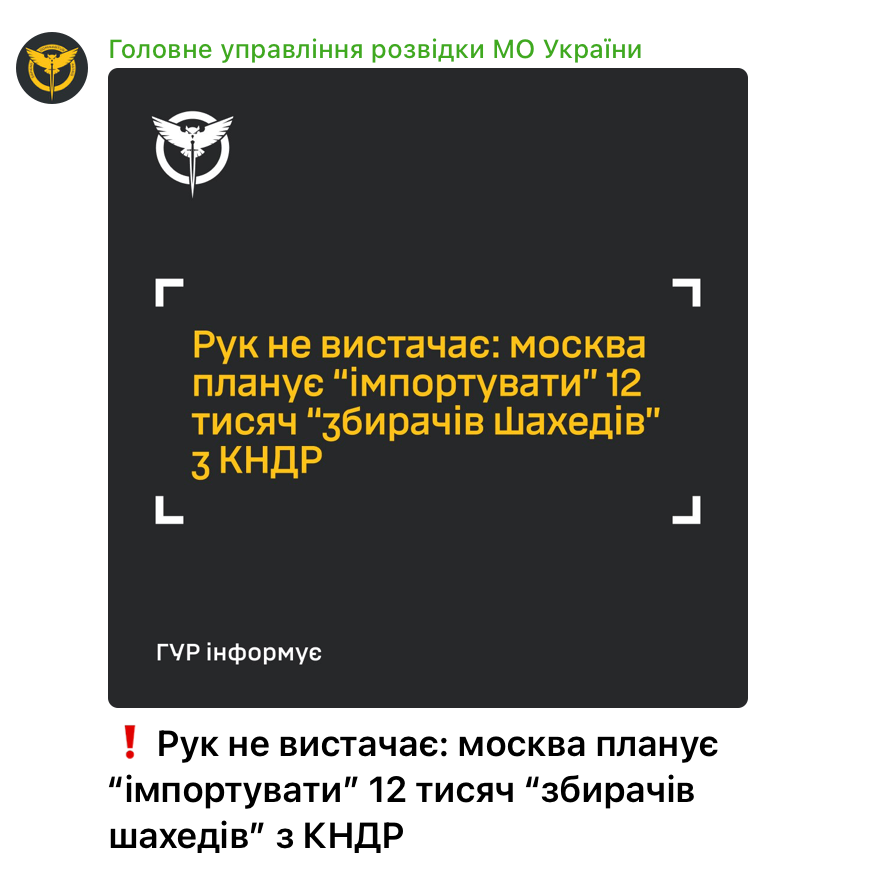
Source: Telegram.October, 2025
<Summary>
A Conflict Armament Research (CAR) field investigation team documented a North Korean–manufactured submunition recovered by Ukrainian authorities after a 23 September 2025 attack on Kherson. The device had been refitted for delivery by a weaponised first-person-view (FPV) UAV, illustrating a growing convergence between DPRK-origin legacy munitions and improvised Russian battlefield innovation.
Confirmed DPRK Origin
Submunition bears Korean markings, indicating production year Juche 89 (2000).
Ukrainian authorities have found additional DPRK submunitions dated Juche 89–99 (2000–2010).
Identified as a DPRK-produced copy of the US M42 High-Explosive, Dual-Purpose (HEDP) submunition.
Modification for UAV Deployment
Original arming and stabilization ribbon system removed.
Replaced with a 3D-printed detonator holder and an electric detonator inserted via a drilled lateral hole.
Battlefield Implications
Demonstrates integration of legacy DPRK cluster submunitions into modern FPV UAV strike systems.
Reflects a broader trend: conventional munitions + improvised UAV delivery mechanisms used to achieve precision, low-cost anti-armor effects.
CAR notes increased use of 3D-printed components and improvised electronics in Russian and Ukrainian FPV systems.
Source: CAR.October 22, 2025
MSMT Releases Second Report Detailing DPRK Cyber and IT Worker Operations
<Summary>
DPRK operates a full-spectrum cyber army, rivaling China and Russia, to steal crypto and fuel its illicit WMD and missile programs—all under UN-designated entities such as the Reconnaissance General Bureau (KPe.031), Ministry of National Defense (KPe.054), Ministry of Atomic Energy and Industry (KPe.027), Munitions Industry Department (KPe.028), Office 39 (KPe.030), and the Second Academy of Natural Sciences (KPe.018).
Massive crypto heists drive Pyongyang’s revenue engine:
• $1.19B stolen in 2024
• $1.65B stolen from Jan–Sep 2025, dominated by the $1.4B Bybit mega-hack.Global laundering pipelines: DPRK actors clean stolen crypto through services operating in China, Russia, Argentina, Cambodia, Vietnam, and UAE, before converting to fiat to support prohibited procurement.
Stablecoins as sanctions-evasion tools: DPRK entities—including Korea Mining Development Trading Corporation (KOMID) (KPe.001)—used cryptocurrency in arms transactions and procurement of raw materials such as copper for munitions production.
Widespread illicit IT-worker deployments (violating UNSCRs):
• IT workers found in China, Russia, Laos, Cambodia, Equatorial Guinea, Guinea, Nigeria, Tanzania
• 1,000–1,500 based in China
• Plans to dispatch 40,000 laborers to Russia, including IT teams
• Foreign facilitators supporting them in Japan, Ukraine, UAE, and the United States.China as the operational backbone:
• DPRK depends on Chinese IT infrastructure, banks, and OTC brokers
• At least 15 Chinese banks used for laundering IT and cyber-heist proceeds
• Identities of DPRK and Chinese facilitators were already provided to China in 2024.Cyber espionage surge against defense industries:
DPRK cyber units steal sensitive intellectual property and defense technology to advance WMD and missile development, using social engineering, malware, and ransomware, and also target critical infrastructure.All these cyber, laundering, and IT-work operations benefit UN-designated entities:
• Korean Workers’ Party (assets freeze)
• Reconnaissance General Bureau (KPe.031)
• Ministry of National Defense (KPe.054)
• Ministry of Atomic Energy and Industry (KPe.027)
• Munitions Industry Department (KPe.028)
• Office 39 (KPe.030)
• Second Academy of Natural Sciences (KPe.018)
Source: MSMT.August 21, 2025
IAEA Director General’s Report on DPRK: Plutonium production continues, Uranium enrichment points to expanding capacity
Uranium Mining and Milling (Pyongsan)
Continued indications of mining, milling, and concentrate production activities were observed at the Pyongsan uranium mine and concentrate plant, consistent with prior years.
Conversion and Fuel Fabrication
Renovation of the UF₄ Production Process Building was completed and the facility appeared operational by October 2024. Ongoing activities were also observed in other buildings, including four newly constructed facilities — two of which are secured within a common perimeter — that exhibit features consistent with chemical processing.Uranium Enrichment (Kangson and Yongbyon)
The Kangson complex was confirmed to contain cascades of gas centrifuges — twelve cascades, each consisting of 344 centrifuges — consistent with the production of LEU, although the possibility of HEU production elsewhere at the site cannot be excluded.
At Yongbyon, the enrichment facility was confirmed to have expanded cascades in its original hall (Hall 1, six cascades), the 2013 extension (Hall 2, eight cascades), and the 2021–2022 annex (six cascades). The cascades, each of 344 centrifuges, remain configured for LEU production, and the facility continued operations during the reporting period. Centrifuges at both Kangson and Yongbyon appeared of the same type, with no indication of advanced centrifuge installation.In December 2024, satellite imagery showed the start of construction on a new two-storey building southwest of the 50MW(e) reactor at Yongbyon. By May 2025 the structure was externally complete, though work on surrounding support facilities was still ongoing. The building’s layout and dimensions closely resemble those of the Kangson enrichment facility, suggesting a similar potential function.
Reactors (Graphite-moderated and Light Water Reactor):
The 5MW(e) Experimental Reactor at Yongbyon continued operations, with a shutdown of about 60 days between August and October 2024 sufficient to allow refueling, indicating the start of a seventh operational cycle.
The LWR was shut down in September and October 2024, and again for much of April 2025, with brief additional shutdowns occurring intermittently thereafter.Reprocessing (Radiochemical Laboratory):
The steam plant serving only the Radiochemical Laboratory became fully operational by late January 2025 and has since run almost continuously, consistent with reprocessing of irradiated fuel from the 5MW(e) reactor’s sixth operational cycle. Additional waste management infrastructure was installed near the facility.Nuclear-powered Submarine:
In March 2025, the DPRK showcased the construction of a “nuclear-powered strategic guided missile submarine” at a shipyard in Sinpho. While imagery confirms a submarine hull under construction, the Agency is unable to verify whether a reactor has been developed or installed.Weaponization and Nuclear Testing (Punggye-ri):
The Punggye-ri nuclear test site remains in a state of readiness to support a nuclear test, though no significant new activity was observed during the reporting period.
Source: IAEA.August 17, 2025
Radio Free Asia’s 2023 exposé reveals the brutal exploitation of North Korean workers abroad, exposing blatant violations of UN sanctions in Russia.
<Radio Free Asia> 2023-9-20, 당국 외면 속 죽어가는 해외 북 노동자 (Overseas North Korean Workers Dying Amid Government Neglect).
<Summary>
Internal documents from a North Korean construction company operating in Russia, recently obtained by RFA, reveal that during the COVID-19 pandemic, workers who fell ill were denied proper medical care and, with the borders closed, were effectively abandoned in Russia, unable to return home.
Excessive Hours: Workers were forced into grueling construction work, often over 16 hours per day including night shifts.
Lack of Medical Access:
Many workers with serious illnesses (cancer, emphysema, heart disease) were denied hospital care due to high costs.
In extreme cases, workers even pulled out their own teeth because they could not go to hospitals.
Financial Exploitation:
After state deductions, workers kept only $100 a month on average, making it impossible to afford medical bills of $5,000–6,000+.
Neglect by Authorities:
North Korean authorities provided no medical or financial support, especially during the COVID-19 border closures, leaving workers effectively abandoned abroad.
One of the internal documents showing examples of North Korean vernacular
Source: DPRK Panel of Experts repot, S/2024/215, p. 431.August 14, 2025
<BBC> North Koreans Sent to Russia to Work "Like Slaves"
<Summary>
Russia is importing tens of thousands of North Korean laborers to cover war-induced labor shortages-over 10,000 in 2024 and potentially over 50,000 in 2025.
The BBC interviewed six escapees who described:
18-hour workdays, seven days a week.
Hazardous work conditions, often without adequate safety equipment or medical care.
Constant surveillance by North Korean security agent, with workers confined to sites.
Squalid living quarters, including bug-infested shipping containers and unfinished buildings.
Physical abuse when workers fall asleep due to exhaustion.
Most wages are collected by the regime; workers get only a small monthly amount after returning home.
These practices violate UN sanctions and constitute forced labor, reflecting widespread state exploitation.
Source: BBC (Edited by DPRK Monitor).DPRK Monitor exposes more cases of North Korean worker exploitation in Russia (See above article by Radio Free Asia in 2023).
Source: BBC.Useful link on DPRK human rights violations

August 8, 2025
Old Game, New Name: Sobaeksu and DPRK’s WMD Legacy
The US government has recently designated the Korea Sobaeksu Trading Company (Sobaeksu) for asset freezing, citing its involvement in foreign currency-generating activities conducted by DPRK IT workers.
However, by examining past DPRK Panel reports, it becomes clear that Sobaeksu is in fact connected to companies previously involved in WMD development—namely, NAMCHONGANG TRADING CORPORATION (NCG) and KOREA MINING DEVELOPMENT TRADING CORPORATION (KOMID).
Diagram of Links Between Kim Se Un, Sobaeksu, and DPRK WMD programme
Source: Maltego Graph Visualization by DPRK Monitor.July 24, 2025
U.S. Treasury Sanctions North Korean Front Company and Individuals for Sanctions Evasion and Revenue Generation
<Summary>
The U.S. Department of the Treasury’s Office of Foreign Assets Control (OFAC) sanctioned the Korea Sobaeksu Trading Company (also known as Sobaeksu United Corporation) and three North Korean individuals—Kim Se Un, Jo Kyong Hun, and Myong Chol Min—for their roles in evading U.S. and UN sanctions and clandestinely generating revenue for the DPRK government.
Key points:
Sobaeksu acts as a front company for the DPRK’s Munitions Industry Department, involved in nuclear and missile development. It sends IT workers overseas (e.g., to Vietnam) and conducts nuclear procurement.
Kim Se Un is a key operator using foreign-based companies to hire North Korean IT workers abroad. A reward of up to $3 million is offered for information leading to his arrest/conviction.
Jo Kyong Hun, based in North Korea, leads Sobaeksu’s IT team and collaborates with Kim on cryptocurrency and financial schemes to support IT operations.
Myong Chol Min, a trade representative, helps facilitate business deals to evade sanctions and import goods (like tobacco) into North Korea. He is also subject to a $3 million reward offer.
July 20, 2025
Source: The MSMT.
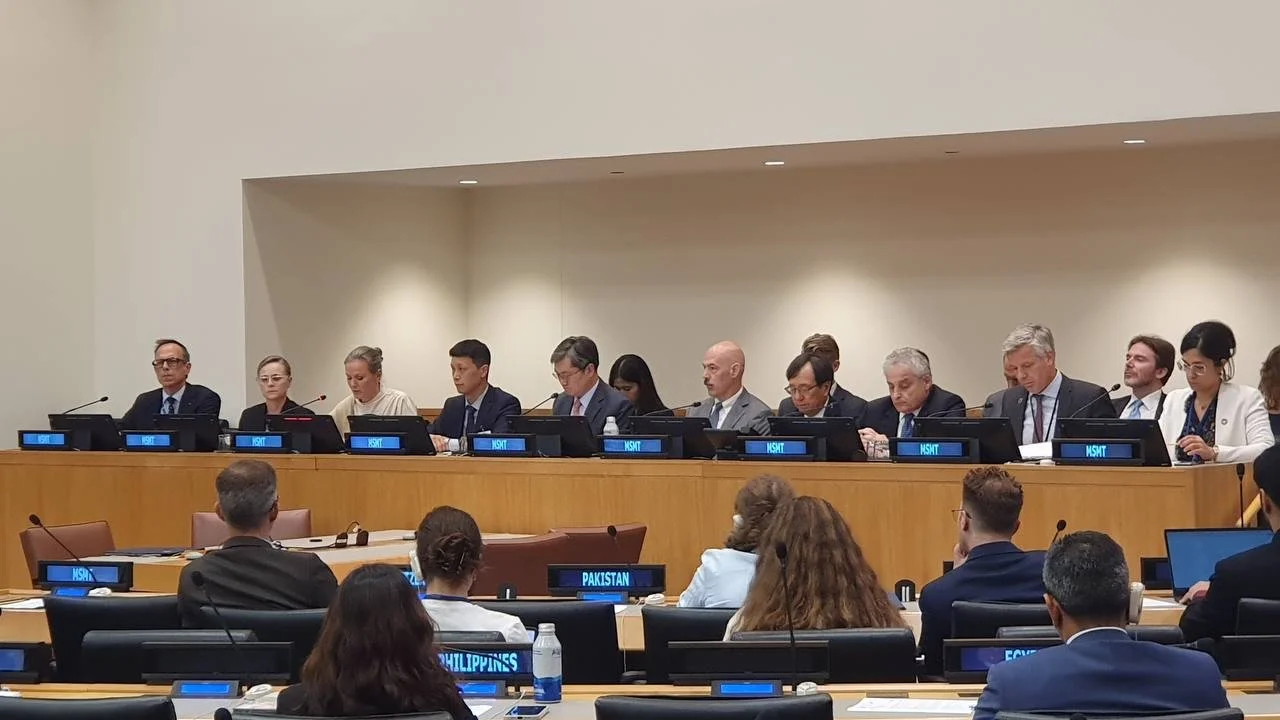
MSMT Unveils Evidence of Sanctions‑Violating DPRK–Russia Military Ties at UN Briefing
<Summary>
On July 17, 2025, the Multilateral Sanctions Monitoring Team (MSMT) held a formal briefing at the United Nations Headquarters in New York to present its first report, titled “Unlawful North Korea–Russia Military Cooperation.” (The report released on May 29, 2025 is available in English, Spanish, French, Russian, Chinese, and Arabic)
The session was attended by representatives from the 11 MSMT member states—Australia, Canada, France, Germany, Italy, Japan, the Netherlands, New Zealand, the Republic of Korea, the United Kingdom, and the United States—as well as delegates from over 40 other UN member countries.
The MSMT was established in October 2024 as a successor to the UN Security Council’s Panel of Experts under the 1718 Sanctions Committee, which was disbanded following a Russian veto. Its mandate is to monitor and report on violations and evasions of UN sanctions on DPRK.
According to the US Department of State website, “the MSMT welcomes interest from additional states to participate in the mechanism.”
July 2, 2025
<CNN> 2025-7-2, North Korea sending up to 30k more troops to fight for Russia.
North Korea to send as many as 30,000 troops to bolster Russia’s forces, Ukrainian officials say.
<Summary>
North Korea is reportedly preparing to send 25,000 to 30,000 additional troops to Russia, according to Ukrainian intelligence and corroborated by Western sources.
Around 11,000 North Korean soldiers were secretly deployed to Russia in late 2024. About 4,000 of them were killed or injured in combat, particularly during the defense of Russia’s Kursk region.
Ukrainian assessment states the Russian Ministry of Defense will supply equipment and arms, with the goal of integrating North Korean troops into Russian combat units, including potential involvement in large-scale offensive operations.
Satellite imagery shows troop transport ships and IL-76 cargo planes at Russian and North Korean ports and airports, suggesting preparations for further deployments.
Ukrainian officials and analysts suggest Pyongyang aims to deepen its "blood debt" with Moscow to gain long-term leverage, despite high short-term losses.
(Edited by DPRK Monitor)
June 26, 2025
<MBC> 2025-06-26, 국회 정보위원회 백브리핑 (Background briefing by the National Assembly Intelligence Committee of the ROK).
ROK National Intelligence Service (NIS) Assessment of DPRK-Russia Military Cooperation
Russia may launch a major offensive in July or August.
In October 2023, North Korea deployed 11,000 personnel to Russia, followed by an additional 4,000 troops.
Russia recently announced the deployment of 6,000 military engineers and construction units for reconstruction in Kursk.
NIS believes further deployments could occur as early as July or August, citing past patterns and ongoing recruitment efforts in North Korea.
Russia is believed to have provided economic aid, air defense systems, and electronic warfare equipment, along with technical support for space launch engines, drones, and missile guidance systems.
(Edited by DPRK Monitor)
June 17, 2025
<Комсомольская Правда> 2025-06-17, Шойгу сообщил, что КНДР направит 5000 строителей на восстановление Курской области
Shoigu stated that the DPRK will send 5,000 construction workers to help with the reconstruction of the Kursk region.

May 20, 2025
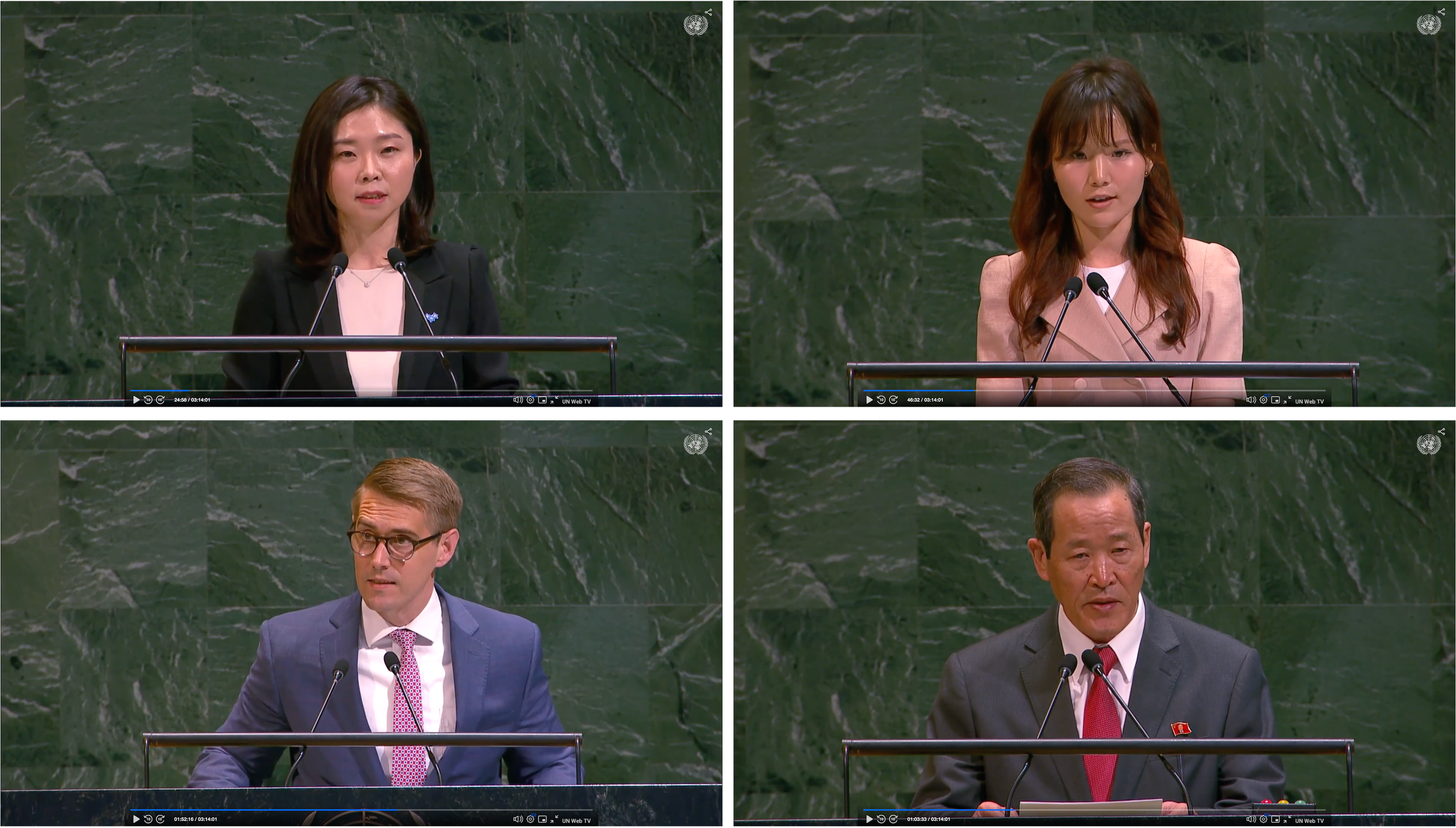
Source: UN Web TV“The DPRK’s unlawful nuclear weapons and ballistic missiles programs is inextricably linked to the regime’s human rights abuses as the programs are financed through the forced labor of North Korean citizens, at home and abroad.”